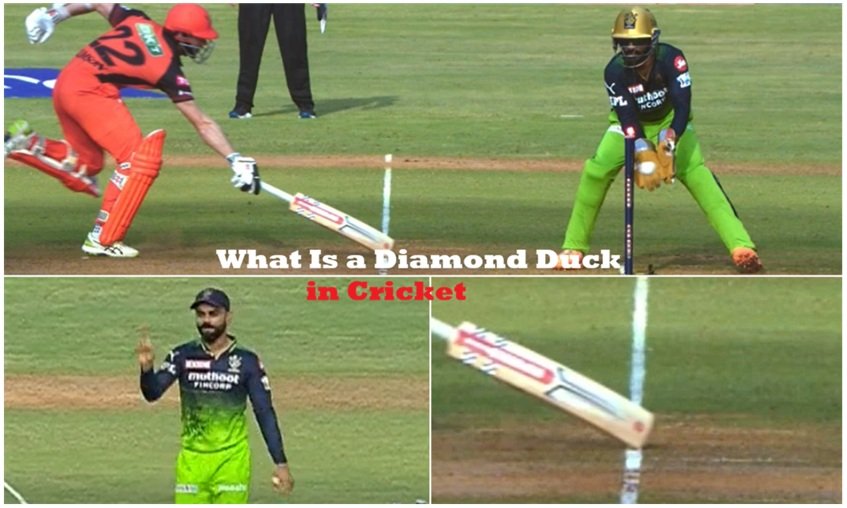

Cricket is a sport complete with specific phrases, and one of the most interesting amongst them is the diamond duck. If you’re a cricket fan, you could have heard commentators say that a batter was given out for a “diamond duck.” But what exactly does it mean?
Many people know about a golden duck, where a batter gets out on the very first ball they face. However, a diamond duck is even more unfortunate because the batter gets dismissed without facing a single delivery.
In this newsletter, we can explain what a diamond duck is in cricket manner, the way it occurs, the difference among other sorts of ducks, and some famous examples from international cricket Fairplay.
Table of Contents
What Is a Diamond Duck in Cricket?
A diamond duck in cricket happens when a batter is dismissed for zero runs without facing any ball.
This means the batter is out earlier than they even get the danger to play a shot. It is one of the rarest and most unfortunate dismissals in cricket.
For example:
- A new batter comes to the crease
- The striker hits the ball and requires a run
- The non-striker gets run out earlier than dealing with a ball
In this example, the batter is dismissed on 0 runs and zero balls, that’s referred to as a diamond duck.
Why Is It Called a Diamond Duck?
Cricket has numerous humorous names for dismissals on zero, known as “geese.”
The word “duck” comes from the form of the wide variety zero, which looks as if a duck’s egg.
Here are the not unusual types:
Golden Duck
When a batter receives out on the first ball they face.
Silver Duck
When a batter receives out at the 2d ball they face.
Bronze Duck
When a batter gets out on the 0.33 ball they face.
Diamond Duck
When a batter gets out without dealing with any ball in any respect.
This makes the diamond duck one of the maximum irritating dismissals for any player.
How Does a Diamond Duck Happen?
A diamond duck commonly takes place through a run out, however there can be different uncommon conditions too.
1. Run Out at the Non-Striker’s End
This is the most commonplace example.
Suppose the striker hits the ball and each player tries to take a run. If the new batter on the non-striker’s throw is run out earlier than dealing with a ball, it becomes a diamond duck.
2. Run Out While Coming Back for a Second Run
Sometimes a batter is making an attempt for a further run and receives a run out without officially going through a delivery.
3. Timed Out (Rare)
In a few uncommon instances, if a batter takes too lengthy to return to the crease and is given out, it may additionally count as a diamond duck.
Example of a Diamond Duck
Let’s recognize with an easy instance:
The team desires 10 runs to win.
A new batter arrives at the non-striker’s end.
The striker hits the following ball closer to midwicket and calls for a fast unmarried.
The new batter runs, however the fielder throws directly on the stumps and the batter is run out.
Scorecard indicates:
Batter Name – Run Out – 0 (0)
This is an excellent instance of a diamond duck.
Famous Diamond Ducks in Cricket
Many famous cricketers have suffered a diamond duck during their careers.
Muttiah Muralitharan
Sri Lankan legend Muttiah Muralitharan had some memorable ducks in his profession, which include unfortunate run-outs.
Glenn McGrath
Australian speedy bowler Glenn McGrath changed into additionally recognised for low ratings and rare duck dismissals.
AB de Villiers
Even fantastic batters like AB de Villiers have confronted uncommon dismissals, proving that cricket can surprise absolutely everyone.
Even the satisfactory gamers are not secure from a diamond duck.
Difference Between Golden Duck and Diamond Duck
Many people confuse these phrases.
| Type of Duck | Meaning |
|---|---|
| Golden Duck | Out on the first ball faced |
| Diamond Duck | Out without facing any ball |
The key distinction is straightforward:
- In a golden duck, the batter faces one ball
- In a diamond duck, the batter faces zero balls
This makes a diamond duck even extra unlucky.
Is Diamond Duck Common in T20 Cricket?
Yes, diamond geese are seen more frequently in T20 cricket due to the fact gamers take extra risks.
Fast going for walks between wickets, quick singles, and pressure situations increase the probabilities of run-outs.
In leagues just like the Indian Premier League (IPL), diamond ducks are more commonplace compared to Test cricket.
Because each ball matters, players often attempt risky runs, leading to those dismissals.
Can a Captain Get a Diamond Duck?
Yes, truly.
Any batter, including the captain, wicketkeeper, or even superstar gamers, can get a diamond duck.
Cricket does no longer spare all people.
There have been many matches where team captains were given run out without facing a ball, creating shocking moments for enthusiasts.
Why Fans Remember Diamond Ducks
Fans keep in mind diamond geese due to the fact they’re dramatic and surprising.
Reasons consist of:
- It occurs right away
- It often modifications the suit result
- It can appear to celeb players
- It creates funny and shocking moments
Commentators additionally love bringing it up as it adds pleasure to the game.
Is Diamond Duck Official in Cricket Rules?
Interestingly, the term diamond duck is more of a cricket slang than a reliable ICC rule.
The reputable scorecard absolutely shows:
zero runs, 0 balls
But commentators, enthusiasts, and cricket professionals call it a diamond duck for clean information.
So while it is extensively used, it is not a reputable law term.
Psychological Impact on Players
Getting out for a diamond duck may be irritating because the batter feels they never even got a truthful threat.
It can affect:
- Confidence
- Team morale
- Match momentum
However, professional players fast circulate on due to the fact cricket usually gives another possibility.
Final Thoughts
A diamond duck in cricket is one of the rarest and maximum unlucky dismissals a batter can face. It means getting out on zero without going through a single ball.
Unlike a golden duck, where at least one ball is confronted, a diamond duck gives no hazard to even play a shot.
It commonly occurs because of a run-out on the non-striker’s give up and is more commonplace in rapid-paced codecs like T20 cricket.
Whether it occurs to a beginner or an international-class famous person like Virat Kohli, a diamond duck always becomes a memorable moment.
Also Read About:-) Narendra Modi Stadium Pitch Report – Detailed Analysis, Stats, and Match Insights